
Presented by: George L. Mutter and Bernard P. Fishman
Abstract:
3D stereophotography of ancient Egyptian sites, installations, and objects first became practical in 1853-6. “Published” in large numbers, they transported viewers from their parlors to previously unseen worlds. Surviving examples are primary documents of early exhibitions, and a window into the perspective of western photographers catering to European and American interests.
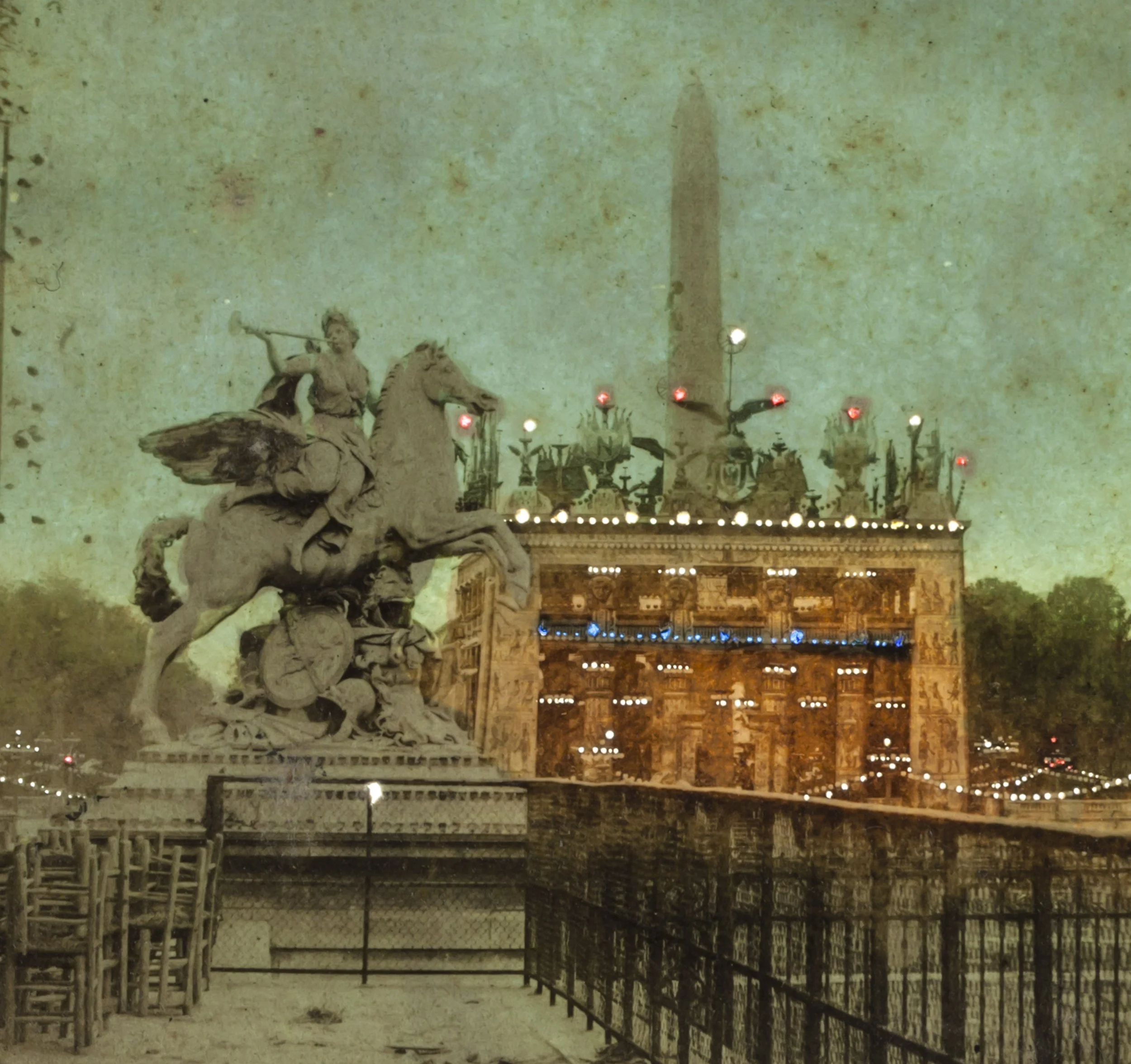
Napoleon’s 1798-1801 Egyptian campaign popularized ancient antiquities and published the first scholarly accounts of ancient Egypt. The Place de la Concorde received a Luxor obelisk, and the Louvre a body of smaller works. Subsequent exploration by adventurers acted as collecting agents for wealthy individuals and organizations. Eventually many of these ancient objects made their way to public venues within interpretive environments. Colorful architectural and sculptural installations, copies of original monuments, were constructed for the London Crystal Palace(1851), and Exposition Universelle (Paris,1867). In contrast, museum displays developed at a variable, generally slower, pace and scale. Objects without provenance were incompletely described and arranged for visual impact. Display galleries created within existing palaces (Louvre, Montagu House), were followed by purpose-built public museums (British Museum) that were sometimes embellished with exotic Orientalizing decor (Berlin, Vienna). Within Egypt, the first national collection was gifted in its entirety by the khedive to the Hapsburg Archduke Maximillian in 1855. Under a newly established Egyptian Antiquities Authority, the Museum at Boulaq (Cairo) opened in 1863 to become the first permanent showcase in Egypt. Quickly overwhelmed by an influx of material, duplicates were redirected to travelers and institutions to decompress storage needs, and larger museum quarters sought – landing eventually in 1901 at Tahrir square.
Freshly digitized stereophotographs selected from an archive of 35,000 original 19th century stereophotographs (www.Photoarchive3d.org) will recreate the experience of ancient Egypt exactly as seen by the public at the time. All images shown in digitally projected glorious 3D (3d glasses supplied).
This will be an in-person lecture and will be held at the Harvard Museum of the Ancient Near East, Room 306 at 5:30 p.m.
Address: 6 Divinity Ave, Cambridge, MA 02138,
or you can find it here.