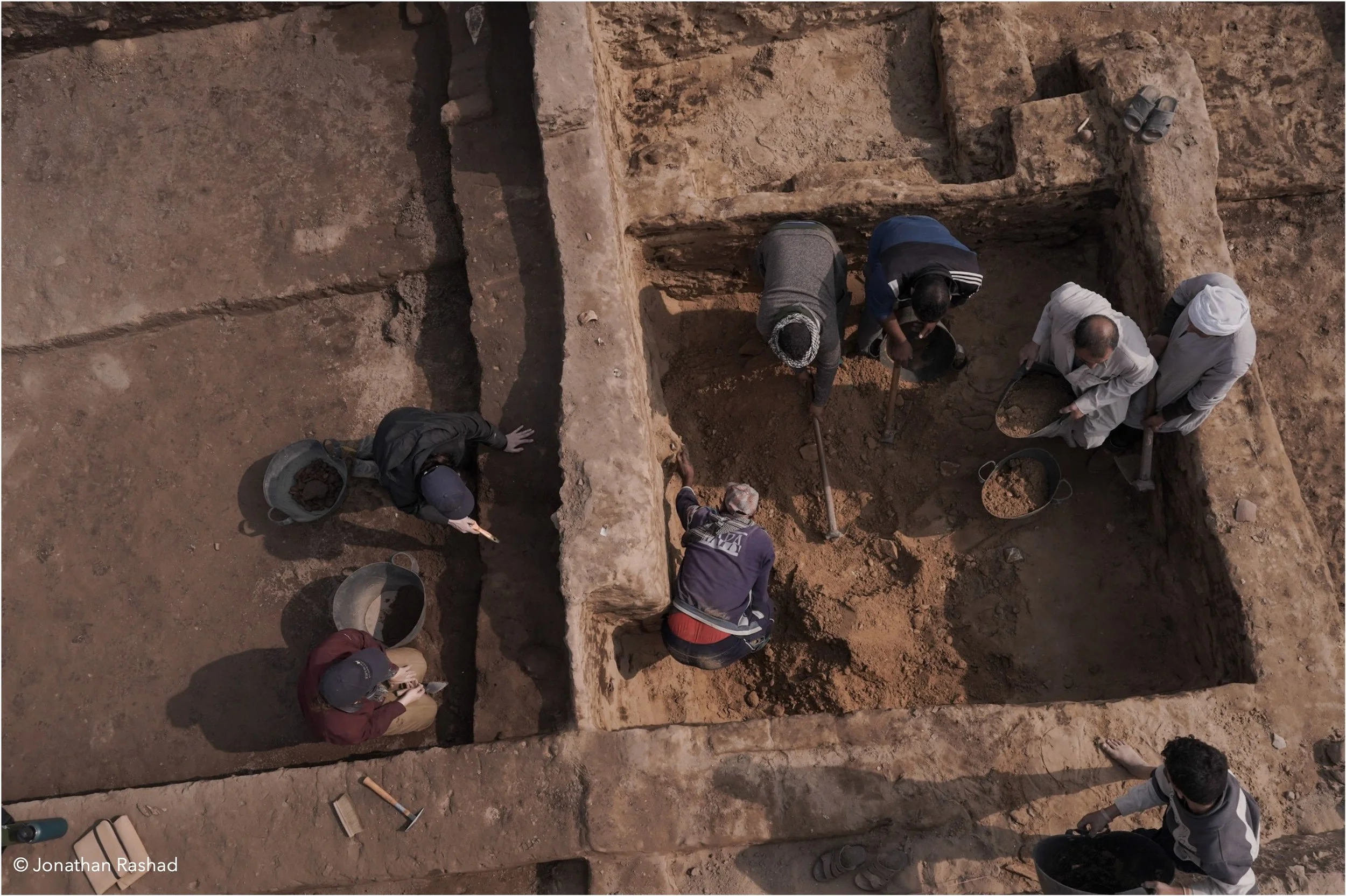
Abstract: Historically, ancient Egypt has often been defined by towering pyramids, monumental temples, and royal tombs. But these iconic remains tell only part of the story. Behind them once stood Memphis — Egypt’s first capital and one of the most important cities in the ancient world. For over three thousand years, Memphis was the political, economic, and cultural heart of Egypt, shaping the development of kingship and administration along the Nile River. And yet, unlike the pyramids that surround it, the city itself has remained largely invisible. This talk explores why Memphis is so important and why it has been so difficult to find. Built on the Nile floodplain, the ancient city lies buried beneath layers of river deposits and modern urban development. As a result, while its cemeteries are among the most famous archaeological sites in the world, the living city has long remained elusive. Drawing on recent excavations at the site of Kom el-Fakhry, this talk introduces new discoveries that are beginning to change that picture. Recent work by the Memphis Kom el-Fakhry Archaeological Project (MKAP) is uncovering traces of the city itself, including houses, streets, everyday objects, and some of the earliest in situ remains from the Old Kingdom (c. 2686–2160 BCE). These finds offer a rare glimpse into the lives of the people who lived and worked in Egypt’s first capital.
Speaker Details: Dr. Didi El-Behaedi is an Egyptian archaeologist, National Geographic Explorer, and Director of the Memphis Kom el-Fakhry Archaeological Project (MKAP) in Egypt. She is also an Assistant Professor of Mediterranean Archaeology at the University of Missouri. Her research focuses on ancient Egyptian settlement patterns and landscapes, with a particular emphasis on integrating remote sensing, GIS, and 3D modeling to illuminate urban development and to advance cultural heritage preservation. In addition to directing MKAP, Didi has participated in archaeological fieldwork at major sites across Egypt, including Tell Edfu, Deir el-Bahri, Asasif, and Hermopolis Magna. She also has expertise in remote sensing, developed through work with NASA Langley and Goddard, where she completed a Space Archaeology fellowship.